

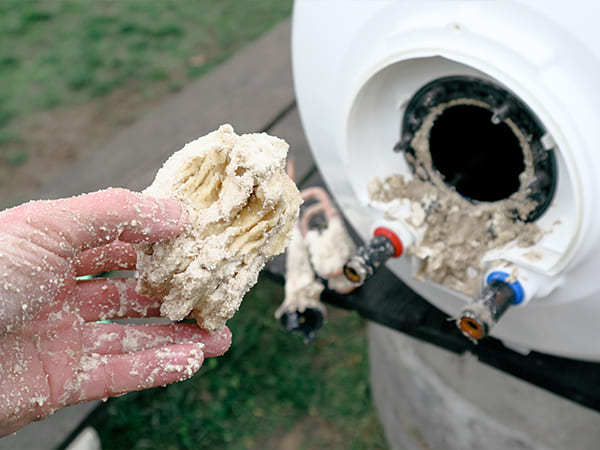
Hard water contains high concentrations of calcium and magnesium, which crystallize when heated, forming limescale inside water heaters. Over time, this buildup reduces energy efficiency, damages heating elements, and leads to premature tank failure. Regular maintenance and mineral management are essential for preserving equipment lifespan in regions with high mineral content.
Why Mineral Content Matters for Texas Homeowners
In Castroville and the surrounding Texas Hill Country, water hardness is an unavoidable environmental factor. The groundwater in our region often travels through limestone and gypsum, picking up significant amounts of dissolved minerals along the way. While these minerals are safe for consumption, they are notoriously destructive to plumbing infrastructure—specifically water heaters.
When hard water is heated, a chemical reaction occurs that precipitates these minerals out of the solution, creating a solid substance known as “scale.” This isn’t just a cosmetic issue; it is a physical transformation that alters how your water heater functions.
Effects of Hard Water on Texas Water Heater Performance
Efficiency Loss and Thermal Lag
As calcium and magnesium ions solidify, they create a layer of “rock” at the bottom of the tank or around the heating elements. This layer acts as an insulator, forcing the heater to run longer and hotter to reach your desired temperature. This thermal lag is why your energy bills may climb even if your hot water usage remains the same.
Mechanical Failure and Stress
The physical presence of scale is heavy and abrasive. In gas units, the sediment layer prevents the heat from the burner from reaching the water efficiently, causing the tank bottom to overheat and potentially crack. In electric units, the scale can completely encase the lower element, causing it to burn out due to the inability to dissipate heat.
Reduced Water Pressure and Clogging
Hard water effects aren’t limited to the interior of the tank. Over time, mineral flakes can break loose and travel into your pipes, clogging aerators, showerheads, and the water heater’s own drain valve. This reduces the overall flow of hot water throughout your home.
Signs Your Water Heater Has Mineral Buildup
We often see homeowners overlook the early signs of hard water damage until the system fails completely. However, the heater usually provides several warnings:
1. The “Popping” or Rumbling Sound
This is perhaps the most common report we receive. As water gets trapped underneath layers of sediment at the bottom of the tank, it boils and turns to steam. This steam eventually bubbles up through the sediment, creating a distinct “kettling” or popping noise. If you hear your water heater “knocking,” it is struggling against mineral buildup.
2. Fluctuating Water Temperatures
If your morning shower starts hot but turns lukewarm faster than it used to, scale may be the culprit. The buildup displaces the actual volume of water the tank can hold and interferes with the thermostat’s ability to accurately read the water temperature.
3. Increased Utility Costs
When a system has to work twice as hard to penetrate a layer of scale, it consumes significantly more energy. A water heater with 1/4 inch of scale buildup can be up to 40% less efficient than a clean unit.
The Risk of Ignoring Hard Water Issues
Ignoring hard water doesn’t just result in higher bills; it leads to physical system failure.
- Tank “Leaking”: Constant overheating and cooling of the tank bottom (caused by the sediment layer) leads to metal fatigue. Eventually, the glass lining of the tank cracks, the steel rusts, and a leak develops. At this point, the unit cannot be repaired; it must be replaced.
- Element Burnout: In electric models, the scale prevents the heating element from dissipating heat into the water. The element eventually reaches a temperature it wasn’t designed to handle and “burns out” or snaps.
Case Study: Premature Failure in Castroville
We recently serviced a home in Castroville where a six-year-old water heater had completely stopped producing hot water. Upon inspection, we found the electric heating elements were encased in nearly two inches of solid calcium carbonate. Because the tank had never been flushed and no water softener was present, the lower element had literally snapped under the thermal stress. The homeowner was facing a full system replacement years earlier than expected—a situation that could have been avoided with simple mineral management.
Expert Water Heater Service vs. DIY Maintenance
While many homeowners attempt to flush their own water heaters, the effectiveness depends on the age and state of the sediment.
If a heater has not been maintained for several years, the sediment may have “chunked” or hardened into large pieces that cannot fit through a standard drain valve. In these cases, a professional may need to use specialized tools or chemical descaling agents to safely clear the system without damaging the valves or internal components.
In Castroville, where the water is particularly “heavy,” we typically find that a standard annual flush is the bare minimum required to keep a system reaching its intended 10-to-12-year lifespan. Without it, many local systems fail closer to the 6-year mark.
When to Call a Professional
If you are concerned about the impact of local water conditions on your home’s plumbing, a professional evaluation can determine the current level of scale buildup. You can reach out to Five Star Plumbing to discuss a maintenance plan or to have your water heater inspected for mineral-related wear.
Frequently Asked Questions
Does a water softener prevent water heater damage?
Yes. A water softener removes the calcium and magnesium ions before they enter the heater, virtually eliminating the formation of new scales. It is the most effective long-term solution for protecting your plumbing.
How often should I flush my water heater in Texas?
Due to the high mineral content in our regional water, we recommend a professional flush at least once a year. If you do not have a water softener, every six months may be more appropriate to prevent sediment hardening.
Can I reverse the damage caused by hard water?
Softening the existing scale is difficult once it has hardened. While a thorough descaling can remove much of the loose sediment and improve efficiency, the structural stress caused by previous overheating (like micro-cracks in the lining) cannot be reversed.
Are tankless water heaters immune to hard water?
Actually, tankless heaters are more sensitive to hard water. The small passages in the heat exchanger can clog very quickly, leading to an “Error Code” and total shutdown. Tankless systems in our area strictly require annual descaling or a pre-filtration system.
Saving Your Heater from Scale
The relationship between Texas hard water and your water heater is one of gradual, invisible wear. By understanding that minerals act as an insulating barrier, you can better appreciate the necessity of routine maintenance. Taking a proactive approach—through regular flushes or the installation of a softening system—is significantly more cost-effective than a premature emergency replacement.
