

Water heater expansion tanks protect Texas plumbing systems from thermal expansion. When water heats, it expands; in closed systems, this creates high-pressure spikes that damage pipes and water heaters. Understanding how these small tanks stabilize pressure is essential for homeowners in Castroville and Medina County to prevent leaks and premature appliance failure.
Why Thermal Expansion Matters for Your Home
In the past, many residential plumbing systems were “open,” meaning expanding water could push back into the city’s main supply line. However, to prevent backflow and contamination, modern plumbing codes in Texas now require “closed” systems using check valves or pressure-reducing valves.
While these valves keep our water supply safe, they create a new challenge: when your water heater runs, the heated water has nowhere to go. Because water is not compressible, its volume increases as the temperature rises. Without a dedicated space to manage this extra volume, the internal pressure of your pipes can skyrocket, leading to “thermal expansion.”
How a Water Heater Expansion Tank Works
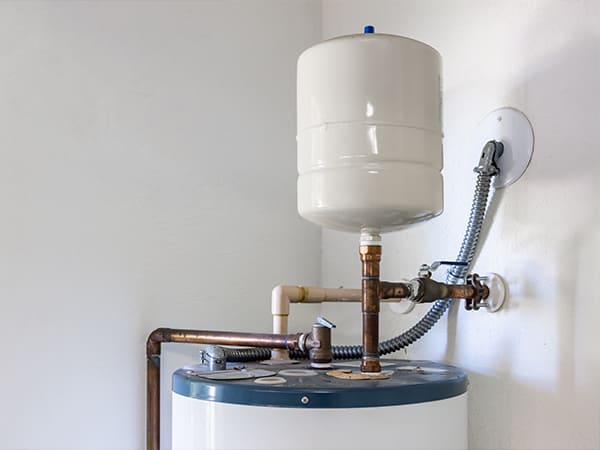
An expansion tank is a small, pressurized vessel—usually holding about two gallons—installed on the cold water inlet pipe above your water heater. Internally, the tank is divided by a rubber diaphragm. One side contains compressed air, while the other side connects to your water system.
- Heating Cycle: As your water heater warms up, the water expands.
- Pressure Relief: The expanding water enters the expansion tank, pushing against the rubber diaphragm and compressing the air on the other side.
- Stabilization: This prevents the pressure from building up within the water heater tank or the home’s copper and PEX lines.
- Recession: Once the hot water is used and the temperature drops, the compressed air pushes the water back into the system.
5 Vital Roles of a Water Heater Expansion Tank
To truly understand why this component is non-negotiable for Castroville homeowners, we have to look at the specific roles it plays within the plumbing ecosystem. It isn’t just a container; it is a dynamic safety device.
1. Absorbing Excess Volume
The primary role is simple physics. When water is heated from 50°F to 120°F, it expands by approximately 2%. In a 50-gallon water heater, that is an extra gallon of volume that suddenly exists where it didn’t before. The expansion tank acts as a “buffer zone” to hold this extra gallon so your pipes don’t have to.
2. Protecting the Water Heater Glass Lining
Most residential water heaters are steel tanks lined with a thin layer of glass to prevent corrosion. Steel can flex under pressure, but glass cannot. When a system lacks an expansion tank, the constant “ballooning” of the steel tank causes the glass lining to crack and flake off, leading to rapid rusting and tank failure.
3. Preventing “Water Hammer” and Pipe Stress
High pressure doesn’t just sit still; it travels. Without a tank to absorb the shock, the increased pressure puts a strain on every joint and fitting in your home. This can lead to the noisy “banging” sounds in walls, known as water hammer, which eventually vibrates joints loose and causes pinhole leaks in copper or PEX lines.
4. Preserving Appliance Solenoid Valves
Appliances like your dishwasher and washing machine use sensitive solenoid valves to turn water on and off. These valves are designed for standard residential pressures (typically 40–60 PSI). When thermal expansion pushes the system to 100+ PSI, these valves can fail prematurely, leading to expensive appliance repairs or indoor flooding.
5. Keeping the T&P Safety Valve from Wearing Out
The Temperature and Pressure (T&P) relief valve is your water heater’s last line of defense against an explosion. If it has to open every day to bleed off thermal expansion pressure, it will eventually build up mineral scale and fail to seal—or worse, fail to open during a real emergency. The expansion tank takes the daily “hit” so the safety valve stays functional.
Common Signs of Expansion Tank Failure
In our work across Castroville and the surrounding rural areas, we often find that expansion tanks are the most overlooked part of the mechanical room.
- The T&P Valve Drip: If you see the safety valve on the side of your heater dripping, it often means your expansion tank is no longer absorbing pressure.
- The “Thump” Test: A functioning tank should sound hollow on the top. If you tap it and it sounds heavy or “thuddy,” the internal diaphragm has likely ruptured, and the tank is “waterlogged.”
The Impact of Local Conditions in Castroville, TX
In Medina County, we deal with specific environmental factors. Many homes rely on well water or municipal systems with high mineral content. Hard water can lead to sediment buildup at the connection point of an expansion tank, eventually clogging the inlet. Furthermore, the high summer temperatures in Texas mean the “cold” water entering your home is already warm, which changes the thermal dynamics the tank must manage.
Real-World Insight: The Case of the Spiking Pressure
We recently assisted a homeowner near Alsatian Valley who was frustrated by recurring leaks at their kitchen faucet. After replacing the faucet twice, they realized the issue wasn’t the hardware—it was the pressure. During the water heater’s recovery cycle, the home’s internal pressure was spiking to over 120 PSI because the expansion tank’s internal diaphragm had failed. By replacing the small expansion tank, we stabilized the entire home’s plumbing and saved their new fixtures from further damage.
Expert Fixes for Failing Tanks
If you are unsure if your current expansion tank is pressurized correctly or if you’ve noticed your water heater’s relief valve dripping, a professional assessment is the safest route. Five Star Plumbing can evaluate your system’s thermal expansion requirements and ensure your home is compliant with local Texas plumbing codes. Reach out to us to ensure your home’s plumbing is properly protected.
Frequently Asked Questions
Does every home in Castroville need an expansion tank?
If your home has a “closed” plumbing system—which includes most homes with a pressure-reducing valve—Texas plumbing code generally requires an expansion tank.
How long do expansion tanks usually last?
On average, they last between 5 and 8 years. Their lifespan is often shorter than the water heater itself because the rubber diaphragm eventually loses elasticity.
Can I install an expansion tank myself?
The tank must be “pre-charged” with air to match your home’s specific static water pressure before installation. Incorrectly pressurized tanks will not function and can lead to early failure.
Why is my expansion tank hot to the touch?
It is normal for the bottom of the tank to feel warm during a heating cycle as it holds expanded hot water. However, if the entire tank is consistently hot, it may indicate a failed diaphragm.
Managing Thermal Expansion
The expansion tank is a small but mighty component of your home’s infrastructure. By providing a “cushion” for expanding water, it protects your water heater, your fixtures, and your pipes from the invisible stress of thermal pressure. Staying proactive with maintenance—especially in our unique Texas climate—ensures your plumbing remains reliable.
