

Rising June groundwater temperatures in San Antonio alter the hot to cold mixing ratio of household showers. This seasonal thermal drift causes unexpected hot water spikes and scalding risks. Calibrating your thermostatic shower valve’s limit stops using digital thermometers and Allen keys restores precise temperature control and safeguards your family.
The Summer Inlet Temperature Surge vs Your Water Heater
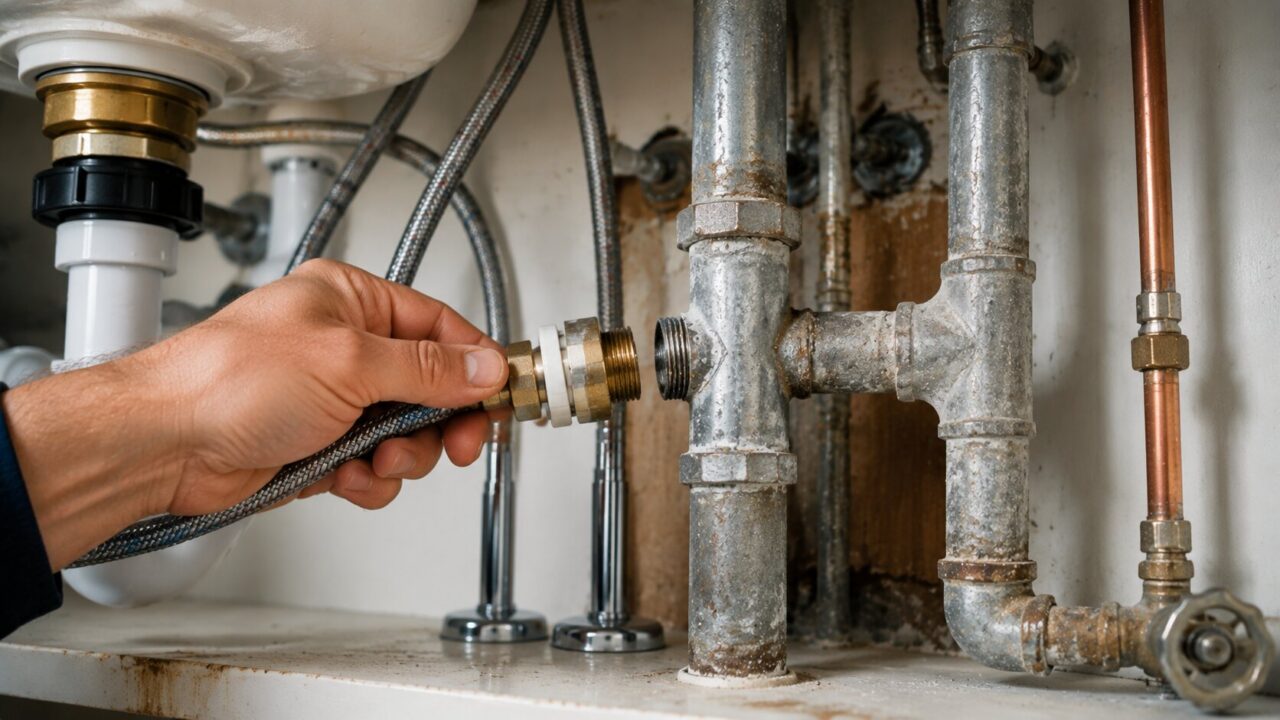
By June, incoming cold-water temperatures in San Antonio homes routinely climb enough to shift thermostatic valve calibration. Homes with attic-routed water lines on San Antonio’s west side often experience larger summertime temperature swings because stagnant cold-water lines absorb radiant attic heat throughout the afternoon. Deep underground, that same heat is slowly warming the shallow municipal water supply lines.
Groundwater drawn from the Edwards Aquifer typically sits at a cool 65°F to 75°F . However, during scorching summer afternoons, water sitting in shallow lateral lines or exposed runs near your home can rise significantly. This presents a major challenge for your home’s primary water heater.
To prevent the growth of harmful bacteria like Legionella, a standard tank or tankless water heater should store water at a minimum of 140°F. This ultra-hot water is then tempered down to a safe, comfortable 120°F before it reaches your bathroom faucets and showers.
But when your cold water inlet temperature rises from its winter baseline to a warm summer peak, the physical mixing ratio inside your shower valve changes dramatically. Your water heater is still sending 140°F water, but your cold line is no longer cold. This narrowing of the temperature gap forces your shower valve to operate at the absolute limit of its original calibration, leading to unexpected temperature spikes.
The Physics of Thermal Drift and Hot Water Slugs
A premium thermostatic shower valve operates on an entirely different principle than a standard, builder-grade pressure-balance valve. While pressure-balance valves only monitor the ratio of incoming water pressure, a thermostatic valve actively measures and responds to the actual temperature of the water. Inside the cartridge is a thermosensitive element, typically a wax capsule or bimetallic strip, that physically expands when heated and contracts when cooled.
When the hot water temperature rises or the cold water supply drops, the wax element expands, pushing an internal piston to restrict the hot water inlet port and open the cold port wider. This ensures the output water remains steady within one degree of your chosen setting.
However, during a South Texas summer, these valves are prone to a phenomenon known as Thermal Drift. To operate safely and ensure the failsafe automatic shut-off feature functions correctly, a thermostatic valve requires a minimum temperature differential of at least 18°F to 20°F between the hot water inlet and the desired mixed outlet.
If your cold water inlet temperature rises too high, the physical expansion range of the wax cartridge is exceeded. When you first activate the shower, you may experience a “hot water slug”—a sudden, blistering surge of unmixed hot water that has been sitting in the hot water line, before the sluggish wax element can expand far enough to restrict the flow.
| Valve Performance Feature | Standard Pressure Balance Valve | Premium Thermostatic Valve |
| Summer Temperature Stability | Moderate (Prone to ratio changes) | Exceptional (Wax element compensation) |
| Scald Prevention Method | Pressure ratio balancing | Active thermodynamic sensing |
| Water Volume Management | Single lever controls both | Independent volume control knob |
| Temperature Limit Stops | Manual plastic rotation ring | Precision brass stop lugs |
Step by Step Calibration of Your Shower Stop Lugs
Recalibrating your shower valve’s safety stops before the peak summer heat waves arrive is a critical maintenance task that keeps your family safe. This process adjusts the physical limit of the handle rotation, ensuring the valve cannot accidentally open wide enough to deliver scalding water.
- Remove the handle cap: Pry off the decorative temperature handle concealing cap to expose the internal handle bush assembly.
- Detach the temperature handle: Use a 2.5mm Allen key to loosen the small grub screw, then slide the temperature handle off the cartridge spline.
- Expose the limit stops: Locate the handle bush and the stop lugs. The handle bush features a physical stop lug that hits a corresponding stop lug on the cartridge body, preventing the handle from turning past a pre-set point.
- Measure baseline output: Turn the shower on to maximum flow and allow the water to run for at least two minutes to stabilize. Place a calibrated digital thermometer directly in the running water stream.
- Adjust the safety stop: If the temperature exceeds a safe maximum of 120°F, remove the handle bush, rotate it clockwise to decrease the allowable hot water flow, and push it back onto the spline. If the temperature is too cool, rotate the handle bush counter-clockwise.
- Test and lock the limits: Repeat this fine-tuning process until the stabilized water temperature reads exactly 104°F to 110°F at the maximum handle position. Finally, tighten the screw to lock the stop lugs in place, preventing the handle from rotating into a scalding zone.
Professional Digital Audits vs Cheap Handyman Adjustments
Many generic handyman services will suggest replacing your entire water heater or swapping out expensive shower cartridges the moment you complain of summer temperature swings. At Five Star Plumbing, we prioritize scientific diagnostics over guessing.
We verify the issue with dynamic pressure readings before recommending cartridge replacement. We connect the manometers directly to your hot and cold lines to monitor your dynamic water pressure under flow. If your home has an imbalanced pressure signature—such as the hot water feeding at 70 psi while the cold water drops to 40 psi during peak neighborhood irrigation hours—no cartridge in the world can maintain a steady temperature.
By measuring the exact temperature of the incoming cold water and comparing it to the water heater’s output, we can prove to you mathematically whether your system simply needs a precise, non-invasive calibration of its stop lugs or if a Pressure Reducing Valve (PRV) needs servicing to restore balanced flow.
Preventive Water Strategies for the South Texas Heat
To keep your home’s water system operating safely and efficiently through the summer:
- Store Hot, Distribute Cool: Keep your water heater tank set to 140°F to permanently kill harmful bacteria like Legionella. Utilize calibrated thermostatic mixing valves at the tank outlet or individual fixtures to temper that water down to a safe 120°F before it reaches your skin.
- Verify Softener Performance: San Antonio’s water contains extremely high mineral content. If your water softener’s resin bed is fouled, a hard water scale will quickly deposit inside your shower cartridge, causing the internal sliding spool or wax element to stick and fail.
- Inspect Your PRV: A failed water pressure regulator allows municipal surges to slam into your fixtures, tearing internal seals and causing your calibrated settings to drift .
Calibrate Your San Antonio Shower Valve Today
If your shower suddenly spikes hot for the first 5–10 seconds during summer afternoons, your thermostatic valve may be operating outside its calibrated differential range. A drifting thermostatic valve can overshoot safe shower temperatures within seconds during peak summer inlet temperatures.
At Five Star Plumbing located at 2780 FM471, Castroville, TX 78009, we provide the licensed expertise, specialized tools, and precise calibration services needed to handle San Antonio’s unique water conditions. Julian Campos and our certified team specialize in luxury thermostatic shower valve servicing and comprehensive system audits. Call Five Star Plumbing at (210) 673-0797 today to schedule your shower safety inspection and enjoy reliable, perfectly balanced water temperatures all summer long!
Frequently Asked Questions
Why does my shower water get warmer in the summer?
Yes, this is due to rising groundwater temperatures warming your cold water lines . Because the cold water feeding your shower is warmer, the traditional mixing ratio of your valve allows the final output temperature to drift higher than intended.
Can a hard water scale cause a thermostatic valve to fail?
Yes, high concentrations of calcium and magnesium in local water deposit mineral scale inside the cartridge. This scale creates friction, preventing the internal wax element from sliding smoothly and causing the temperature to swing wildly.
Do I need to shut off my water main to calibrate my shower valve?
No, you do not need to turn off the main water supply to complete a standard limit stop calibration. The calibration process only adjusts the handle’s physical rotation limits, meaning the internal water supply can remain active during the adjustment.
