
Why Solid Brass Fixtures Save Castroville Homeowners Money
Castroville homeowners face severe plumbing corrosion due to mineral heavy water. Standard chrome plated zinc fixtures degrade quickly, causing hidden water leaks and expensive repairs. Upgrading to solid red brass fixtures with premium physical vapor deposition finishes prevents structural damage, resists limescale, and lowers the lifetime cost of home ownership.
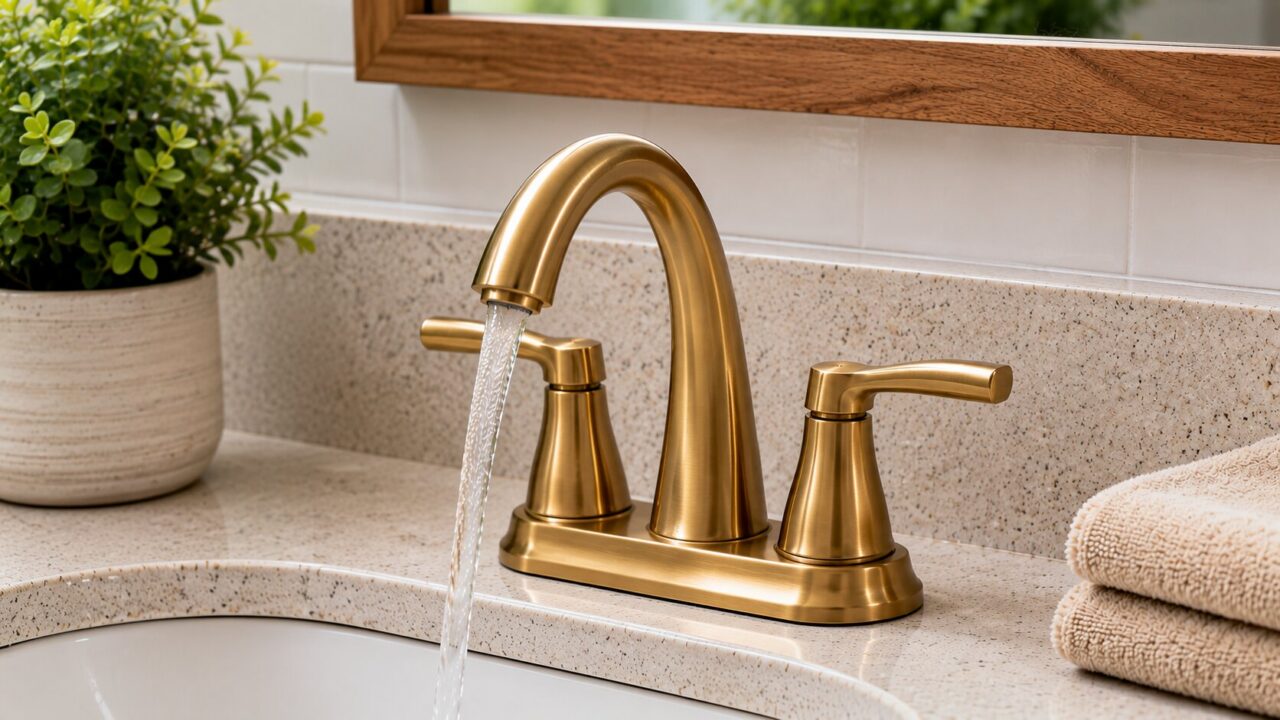
Upgrading from chrome-plated zinc to solid red brass fixtures helps Castroville homeowners resist hard water corrosion, reduce mineral buildup, and extend plumbing fixture lifespan.
The Medina Valley Water Chemistry Battle
If you commute daily along U.S. Highway 90 West, passing the historic Alsatian-style Medina County rest area or driving past the welcome sign in Hondo, you are traveling through a region defined by its ancient limestone geology. The groundwater feeding private wells and municipal systems in Castroville is drawn directly from the Edwards Aquifer. While this water is completely safe to drink, it carries an exceptionally high mineral load, routinely testing between 280 and 300 parts per million of dissolved calcium and magnesium.
This high mineral concentration poses a continuous threat to your home’s plumbing fixtures. Every time water flows through a faucet and evaporates on the spout, it leaves behind a stubborn, rock-hard layer of calcium carbonate, commonly known as limescale.
In households along FM471 or near the Castroville Regional Park, this mineral scale acts as a physical abrasive. It aggressively grinds against your fixtures’ internal seals, cartridges, and decorative coatings every single time you turn the handle.
The Metallurgy of Corrosion in Plated Fixtures
The primary difference between a high-end durable faucet and a budget-friendly retail model is the base metal beneath the shiny outer finish. Most standard retail fixtures are constructed from cheap zinc alloys or thin, electroplated chrome over soft, composite metals.
During manufacturing, electroplated chrome requires an initial copper underlayer to help the plating bond. In very hard water environments, the high mineral and chlorine content of the water quickly wears down the outer chrome shell, exposing microscopic pinholes in the plating.
This allows moisture to seep underneath the finish, triggering a highly destructive electrochemical reaction known as galvanic corrosion. The soft zinc alloy beneath the plating acts as a sacrificial anode and begins to dissolve from the inside out.
You will first notice this failure through very specific physical indicators:
- Blistering and Bubbling: The chrome finish rises and bubbles near the base of the spout or around the handles, forming sharp, jagged edges that can cut your skin.
- The White-Rust Bloom: A powdery, crusty white and green residue accumulates around the joints, indicating that the base metal is actively disintegrating.
- Internal Cartridge Seizure: Mineral scale lodges between the cartridge walls, causing the handle to become stiff, rough, and difficult to rotate.
Solid red brass, in contrast, is a copper-zinc alloy that contains no iron, making it completely immune to rust and highly resistant to both corrosion and limescale adhesion.
Total Cost of Ownership and Life Cycle Realities
Zinc-alloy faucets installed in Castroville typically fail within 3–5 years under high mineral loads, increasing replacement and repair costs compared to solid brass alternatives.
Standard zinc-alloy faucets under hard water conditions typically fail within three to five years. When they fail, you are forced to pay for replacement parts, diagnostic service calls, and the labor associated with installing a new fixture.
Worse still, back-pressure from clogged aerators on weakened zinc threads often causes silent under-sink leaks. This water slowly drips onto your wooden cabinetry, leading to structural rot, mold remediation costs, and extensive cabinet repairs before the leak is ever detected.
In my inspections, solid red brass fixtures with PVD coatings maintain full functionality for 15–20 years because the zirconium/titanium surface prevents mineral adhesion and pitting.
This creates an incredibly hard, scratch-resistant surface that mineral scale cannot easily stick to, completely eliminating the flaking and pitting common with electroplated chrome.
Specialized Tooling and Diagnostic Precision
At Five Star Plumbing, we do not believe in replacing expensive parts based on guesswork. We take a precise, technical approach to verify the health of your entire system.
When we inspect a home, our first step is connecting a digital manometer to your water systems. We run a dynamic pressure test to verify that your home’s main Pressure Reducing Valve (PRV) is operating correctly.
Static water pressure in San Antonio can range from 35 to 175 psi. If your PRV is failing, high-pressure surges and water hammer will continuously shock your fixtures, rapidly blowing out the internal gaskets of cheap plated faucets.
We also utilize the LeakTronics Pro Complete Kit. This acoustic diagnostic equipment allows us to listen through the concrete slabs and wall cavities of Castroville homes.
Our point of absolute certainty occurs when our manometer and acoustic sensors confirm that your main supply lines are fully intact, allowing us to focus on upgrading your surface fixtures to high-durability brass assemblies with complete confidence.
Solid Brass vs Electroplated Chrome Materials Comparison
Choosing the right plumbing materials is the single most important decision for protecting your home’s equity.
| Material | Corrosion Resistance | Lifespan Range | Under-Plating Risk |
| Plated Zinc Alloy | Low (Prone to pinholes) | 3 to 5 years | High (Galvanic blistering) |
| Electroplated Chrome | Moderate (Spots easily) | 5 to 7 years | Moderate (Base metal rot) |
| Solid Red Brass | Exceptional (No iron content) | 15 to 20 years | None (Monolithic metal) |
Preventive Strategies for the Local Area
You can take simple, proactive steps to protect your fixtures and lower your overall home maintenance costs:
- Dry Your Faucets: After using your sink, use a soft microfiber cloth to wipe down the spout and handles. Removing standing water droplets prevents the evaporation process that leaves behind a hard calcium scale.
- Annual Aerator Descaling: Unscrew your faucet aerators once a year and soak them in warm distilled white vinegar for an hour. This dissolves the internal mineral crust, restoring full flow and eliminating the back-pressure that destroys cartridge seals.
- Flush Your Water Heater: Flush your water heater two to three times a year. This clears out loose calcium sediment before it can travel through your hot water lines and clog your delicate faucet cartridges.
- Install aWater Softener: Sized specifically for San Antonio’s eighteen-plus grains of hardness, a demand-initiated water softener removes calcium and magnesium before they can ever enter your home’s plumbing system.
Upgrade to Solid Brass and Protect Your Home Today
During inspections in Castroville, I see mineral crust forming inside faucet cartridges within 3–5 years on zinc fixtures, causing stiff handles and premature replacement. Unchecked mineral buildup can cause aerator blockages, cartridge seizure, and hidden under-sink leaks, damaging cabinetry over time. At Five Star Plumbing, we provide the licensed expertise, well-water experience, and high-quality materials needed to permanently lower your home’s total cost of ownership. Julian Campos and our professional team specialize in water pressure calibration, whole-house water softeners, and premium solid brass PVD fixture installations. Reach out to Five Star Plumbing at (210) 673-0797 and at 2780 FM471, Castroville, TX 78009 today to schedule your comprehensive under-sink inspection and secure your peace of mind!
Frequently Asked Questions
Does hard water cause cheap faucets to fail faster?
Yes, high concentrations of calcium and magnesium in local water deposit an abrasive mineral scale inside the faucet cartridge, causing the internal seals and O-rings to wear down and leak prematurely.
Is solid brass really better than chrome-plated zinc?
Yes, solid brass contains no iron and resists tarnish and rust completely, whereas cheap zinc alloys suffer from rapid galvanic corrosion and flaking when water penetrates the outer plating.
Will a water softener extend the lifespan of my faucets?
Yes, by replacing hard calcium and magnesium ions with non-scaling sodium ions, a whole-house water softener prevents the limescale buildup that causes cartridges to seize and leak.
Do I need a permit to upgrade my home’s faucets in Castroville?
No, standard “like-for-like” replacements of residential kitchen and bathroom faucets, toilets, and sinks are exempt from permit requirements under local building codes, provided you do not relocate or alter the main supply or drain configurations.